

Key Takeaways
- A consistent daily routine can help reduce anxiety and confusion for those with dementia.
- Structured days provide a sense of purpose and can support cognitive function.
- A thoughtful schedule balances purposeful activities with quiet time and social connection.
- Personalization is key—a good routine incorporates individual history and preferences.
- For families, a predictable schedule offers peace of mind and improves communication.
Understand How Structure Supports Well-Being
When a family member is navigating the challenges of memory loss, you search for ways to provide comfort and stability. Finding the right support system, as the one offered at Inspired Living at Ocoee, can make a significant difference, and you likely have many questions about what comes next.
A predictable daily routine provides a powerful sense of security and comfort for a person navigating memory changes. This structure is a cornerstone of supportive memory care, helping to create a reassuring rhythm for each day.
How Structure Supports Well-Being in Memory Care
A Calm and Predictable Environment
You’ll find that a familiar schedule can significantly reduce feelings of anxiety and confusion. When your loved one knows what to expect from their day—from mealtimes to activities—it creates a stable foundation. This predictability is important throughout all stages of Alzheimer’s and offers a deep sense of security, helping each day feel more manageable and calm.
A Sense of Purpose and Accomplishment
Daily routines give your loved one’s day a clear shape and flow. You’ll see how simple, repeated actions like joining a morning stretch group or enjoying a quiet afternoon of reading can provide a gentle sense of achievement. These small accomplishments can help a person feel more in control of their day.
Support for Cognitive Function
A consistent daily routine can also support cognitive pathways gently. By following a familiar sequence of events, a person with dementia may navigate their day more easily. The repetition of the schedule acts as a subtle guide, helping them move from one activity to the next.
What a Thoughtful Daily Schedule Includes
Consistent Morning and Evening Rhythms
You’ll find that a regular schedule for waking, meals, and preparing for bed helps regulate the body’s internal clock. This consistency can contribute to better sleep patterns and a more stable mood throughout the day. It helps set a peaceful tone for both the start and end of each day.
Engage with Purposeful Activities
A balanced routine includes structured time for purposeful activities that gently stimulate the mind and body. These can be social, like a group chat over coffee, or creative, like painting or music. The goal is to provide opportunities for connection and enjoyment without feeling rushed.
Quiet Time and Social Connection
A thoughtfully designed schedule also recognizes the need for balance. It carves out moments for both quiet rest and social interaction. This allows your loved one to recharge and connect with others at a comfortable, natural pace.

Personalization Within a Daily Framework
Focus on Individual Preferences and History
A routine doesn’t mean every day is rigid or impersonal. Your loved one’s past hobbies, career, and personal tastes can be woven into their daily schedule. This approach helps make activities more meaningful and comforting by connecting to a person’s unique life story.
Adapt the Schedule for Changing Needs
As your loved one’s needs evolve, their routine can be gently adjusted to match. This flexibility is an important part of long-term health and wellness support. You want a schedule that serves the individual, not the other way around.
Create Meaningful Moments Each Day
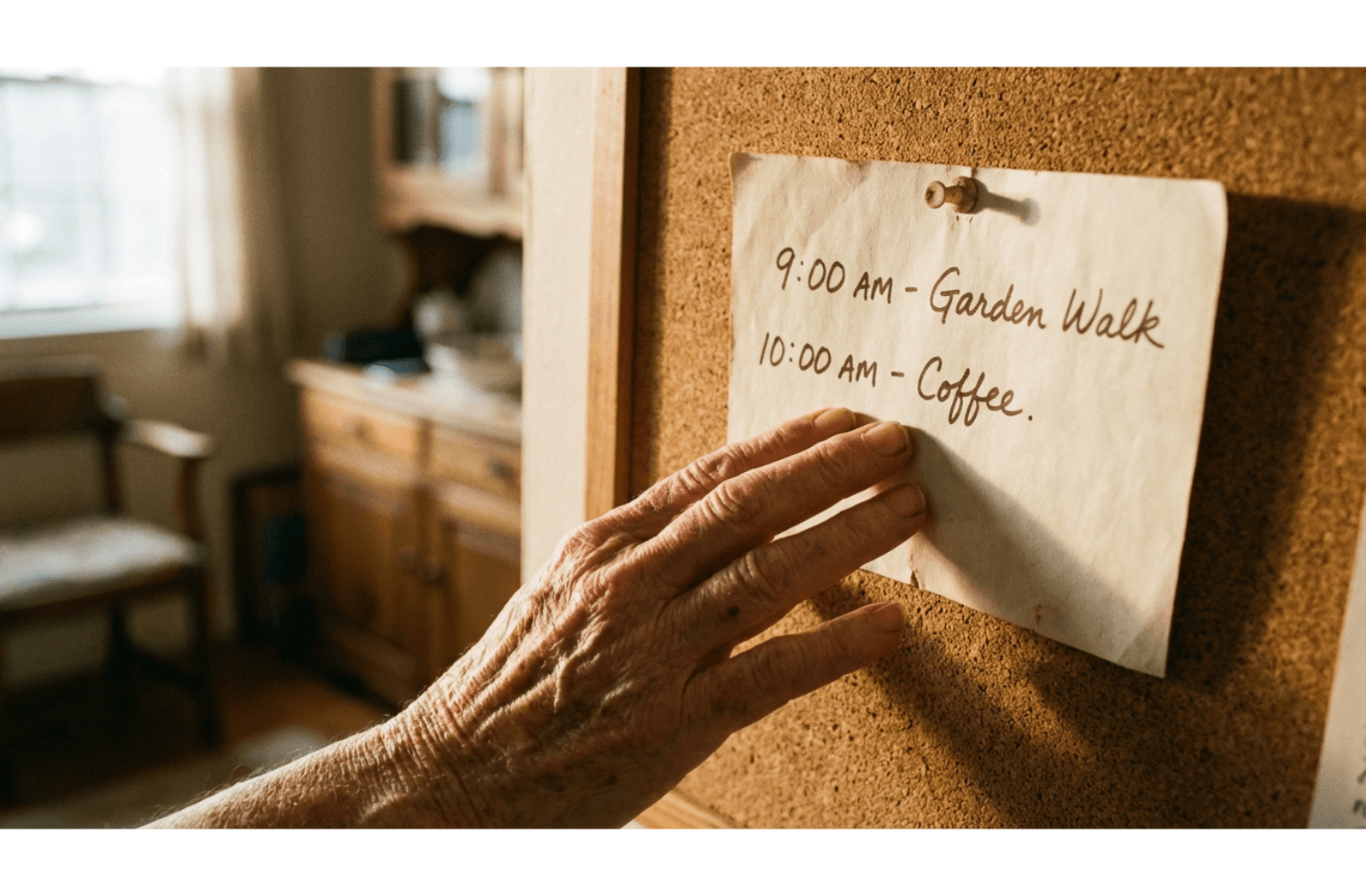
Ultimately, you can think of a routine as a framework for creating positive and comfortable experiences. It might be as simple as listening to a favorite album at the same time each afternoon or enjoying a walk in the garden after breakfast. These moments build a day filled with familiarity and contentment.
How Consistency Helps You and Your Family
Peace of Mind for Your Loved Ones
Knowing your family member has a supportive, predictable daily routine can provide immense reassurance. This knowledge also makes your visits more comfortable, as you have a better sense of what to expect and how best to connect during your time together.
A Foundation for Consistent Care
A routine helps the care team observe changes in your loved one’s health or behavior more easily. This consistency is valuable in any senior living setting, from assisted living to memory care, as it helps provide attentive and responsive support.
Improve Communication and Connection
Knowing the daily schedule allows you to plan visits and phone calls at the best times. This can foster better connections, especially when you understand how to communicate effectively, and lead to more positive interactions with your loved one.
Find Support Through Structure in a Senior Living Community
A consistent routine is a foundational element of quality memory care. It offers stability for residents and provides reassurance for you and your family. At Inspired Living at Ocoee, this thoughtful structure is combined with personalized attention and engaging programs. This approach supports not just daily needs, but the overall well-being of individuals in assisted living, memory care, and even for short-term respite care stays.
You can schedule a visit to see how a structured and supportive community can make a difference.